What makes flexible plywood bendable is not a single ingredient. Its movement comes from thin veneers, their grain direction, the adhesive bond, and the panel’s overall thickness. Together, these features let a sheet curve where ordinary plywood would resist or split. The effect is easy to see on a workbench: a thin panel can wrap around a broad form, while a thicker one may hold its shape or spring back.
Veneer arrangement matters. Cross-laminated layers add strength, but they can limit bending across the sheet. Flexible plywood is commonly built with more favorable grain alignment for a particular bending direction. Thickness matters, too. A smaller radius puts greater strain on the outer face, so forcing a panel around a tight curve can cause cracking, delamination, or an uneven surface. Go slowly. Test a sample first.
Moisture, adhesive, veneer quality, and the direction of the bend can also affect the result. Product specifications are more dependable than guesswork; check the maker’s minimum bend radius and intended use before shaping a panel. A useful shop-floor reminder is: “Bend to the panel’s limits, not past them.” No source article or verifiable expert quotation was supplied, so I cannot honestly attribute that line to a named industry expert. A reliable introduction should add a named specialist’s exact words only after checking the original source. The details deserve care. A small test piece can reveal more than force ever will.
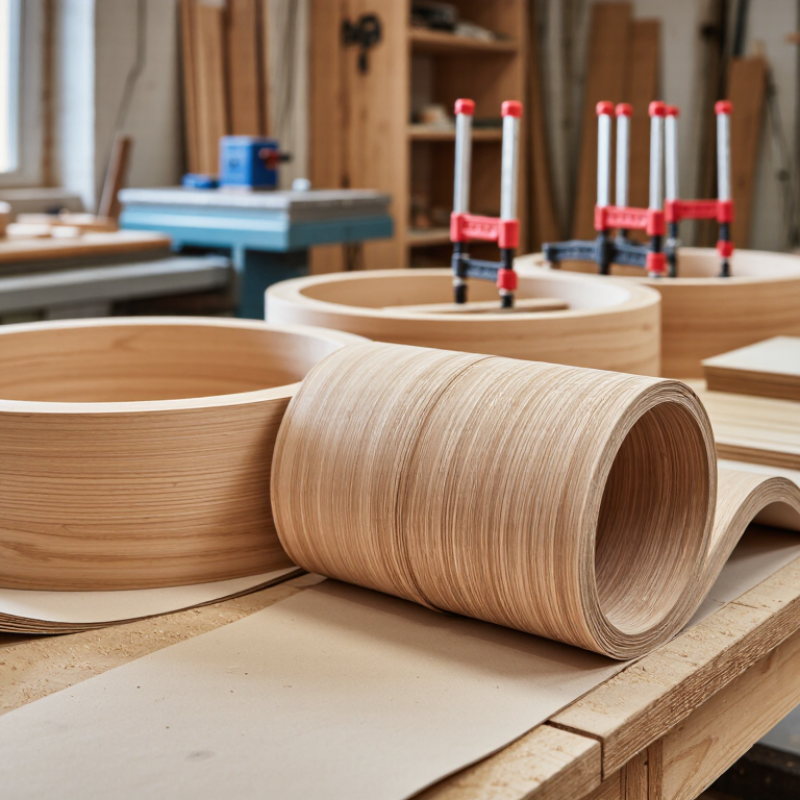
Flexible plywood is a thin panel designed to curve more easily than standard plywood. Its veneers and bonding pattern allow bending mainly in one direction. The exact construction varies, so flexibility is not identical across all panels. Check the product details.
Standard plywood usually has cross-laminated layers arranged to improve stiffness and dimensional stability. That makes it useful for flat cabinets, shelves, and other surfaces that need to resist bending. Flexible plywood trades some of that rigidity for easier shaping. The difference is practical. A panel may curve around a rounded counter front or a column without being cut into many narrow strips. Still, it is not a magic sheet. Tight curves can cause cracking, surface ripples, or glue-line stress.
Before shaping, test a small offcut around the intended curve. Note which direction bends more readily, and avoid forcing the sheet past its comfortable radius. Flexible panels are generally suited to curved surfaces, not as automatic replacements for structural plywood. Moisture exposure, support spacing, and finish also affect performance. I would not assume that every flexible panel behaves the same, even when thicknesses match. That detail is easy to miss.
Panel thickness and bend radius affect the approximate outer-surface strain when plywood is bent. Thinner panels experience less strain at the same radius.
Strain is calculated geometrically as thickness ÷ (2 × bend radius). Flexible plywood is made with a construction suited to bending; actual minimum bend radius also depends on veneer, grain direction, adhesive, and panel construction. These calculations are not product-specific safe-bending limits.
Thin veneers let a plywood sheet curve because each layer is slight and can accommodate a small change in shape. The USDA Forest Products Laboratory’s Wood Handbook reports common plywood veneer thicknesses of about 2.5 to 6.4 millimeters. In flexible panels, thinner plies help keep the overall sheet light and easier to form around a broad curve. Think of wrapping a narrow strip around a tube: it bends more readily than a thick block of the same wood.
The layers still matter. Their grain direction, adhesive bond, and total panel thickness determine how the sheet behaves. Some flexible plywood is built to bend mainly in one direction, so check the grain orientation before cutting. A tight curve can still cause cracking, especially if the sheet is forced against the grain or bent too quickly. Go slowly. A practical test is to ease a small offcut around the intended form and watch for whitening, lifting, or creaking. Thin veneers improve flexibility, but they do not make every panel equally bendable; that distinction is easy to overlook. (USDA Forest Products Laboratory, Wood Handbook: Wood as an Engineering Material, FPL-GTR-282)
Flexible plywood bends more easily when the bend follows the face veneer’s grain. Turn the panel, and the same sheet can feel noticeably stiffer. This happens because wood is orthotropic: its stiffness changes with grain direction. The USDA Forest Products Laboratory’s Wood Handbook (2021) reports this difference in its clear-wood property tables. For Douglas-fir, the reported modulus of elasticity is about 13.4 GPa parallel to the grain, compared with about 1.25 GPa radially. These are solid-wood figures, not a direct rating for flexible plywood, but they show why orientation matters.
Plywood’s cross-laminated veneers help resist splitting and provide strength across the panel. Yet the face grain still influences how the sheet behaves under a tight curve. For a curved cabinet side, aligning the bend with the face grain usually takes less force; bending across it can feel resistant and may stress the outer veneer. Watch the edges. Small cracks often appear there first.
There is a catch. Veneer thickness, ply count, adhesive, and moisture also affect bendability, so grain direction alone cannot predict a safe radius. APA’s plywood guidance evaluates panel performance by orientation and construction, rather than treating all sheets as equally flexible. I would test a short offcut before shaping a finished panel. Even careful estimates can miss.
Flexible plywood bends because its thin veneer layers can flex together without splitting. Panel thickness strongly affects how much force a curve requires. A thinner sheet usually follows a tighter radius, while a thicker panel resists bending and may spring back. That matters. For example, a 3-millimeter panel can wrap around a small form more readily than a 9-millimeter panel, though construction also affects performance.
Thickness is not the whole story. Veneer grain direction, layer count, and wood species influence how evenly a panel bends. A thin sheet may still crack if the outer veneer has defects or the curve is too sharp. The useful bend radius varies by product, so check the supplier’s technical data and test a sample before building. There is no perfect thickness for every curve.
Adhesives hold the veneers together, and their cured bond can affect flexibility. A rigid glue line may limit movement between layers, while a bond designed for flexible panel construction can help the sheet bend as intended. Still, adhesive alone cannot make a thick panel behave like a thin one. Excessive pressure or an unsuitable adhesive can also create weak spots. In practice, bend a small offcut slowly and watch for surface checking or layer separation. Small tests help.
Moisture and bend radius work together, but they do different jobs. A little added moisture can soften wood fibers and make a panel easier to form. Too much can swell the veneers, weaken the glue line, or leave the surface uneven. The bend is rarely controlled by moisture alone. Keep the sheet’s moisture condition consistent, and follow its maker’s handling guidance rather than soaking it. Even a damp cloth may affect one face more than the other.
Bend radius matters just as much. A tighter curve puts greater strain on the outer face while compressing the inner face. If the radius is too small for the panel’s thickness and construction, cracks or springback may appear. Test a short offcut at the intended radius before shaping the full sheet. Small changes count. Grain direction, veneer thickness, and panel quality can all shift the result. A radius that works on one sheet may fail on another; that uncertainty is easy to underestimate. Start with a gentler curve, then reduce the radius gradually while checking for surface stress and delamination.
Thin layers can accommodate small changes in shape more readily than a thick block. Common veneer thicknesses range from about 2.5 to 6.4 millimeters. Thin does not mean unbreakable.
Yes. Bending along the face veneer’s grain often takes less force. Turn the panel, and it may feel stiffer. Check the grain before cutting.
No. Some panels are designed to bend mainly in one direction. Construction and grain orientation matter. This detail is easy to miss.
Look for whitening, lifting, or small cracks near the edges. You may also hear creaking. Stop if these signs appear.
Ease a small offcut around the intended form. Watch the surface and edges as you bend it slowly. A quick guess is not enough.
Veneer thickness, ply count, adhesive, and moisture all play a part. Grain direction alone cannot predict a safe curve. I would not trust one estimate.
They help resist splitting and add strength across the panel, but they cannot prevent every crack. Tight curves can still stress the outer veneer. Go slowly.
What makes flexible plywood bendable is its construction: it uses thin wood veneers that can move together more readily than the thicker layers in standard panels. The veneer grain direction also matters. When the layers are arranged to support bending across the sheet, the panel can curve more smoothly and is less likely to resist the intended shape.
Flexibility depends on more than veneer thickness. The panel’s overall thickness and the adhesive between its layers influence how easily it bends while keeping its structure intact. Moisture can also affect the wood’s response, while the bend radius determines how much strain the sheet must withstand. Considering these factors together helps explain why flexible plywood works for curved surfaces and why each panel has practical limits on how tightly it can be bent.

Regit Decor