Plywood serves as an effective solution for flooring underlayment in various construction projects. Many homeowners wonder, "Can plywood be used for flooring underlayment?" The answer is yes, but it's essential to consider a few factors. Plywood offers strength and durability, essential traits for supporting your flooring above. It can enhance insulation and noise reduction. However, not all plywood is suitable for this purpose.
Using the right thickness and grade of plywood is crucial. Thinner sheets may not provide adequate support, while improper installation can lead to issues. Surface imperfections can cause squeaks and other noises. Moreover, moisture protection is vital; otherwise, warping may occur. It is important to ensure your plywood is treated properly.
In some cases, using plywood may not yield the expected outcomes. For instance, if working on a concrete slab, the installation methods differ. Homeowners need to weigh their options and plan carefully. Proper research and preparation can lead to successful results. Understanding the nuances of plywood as underlayment allows for making informed choices.
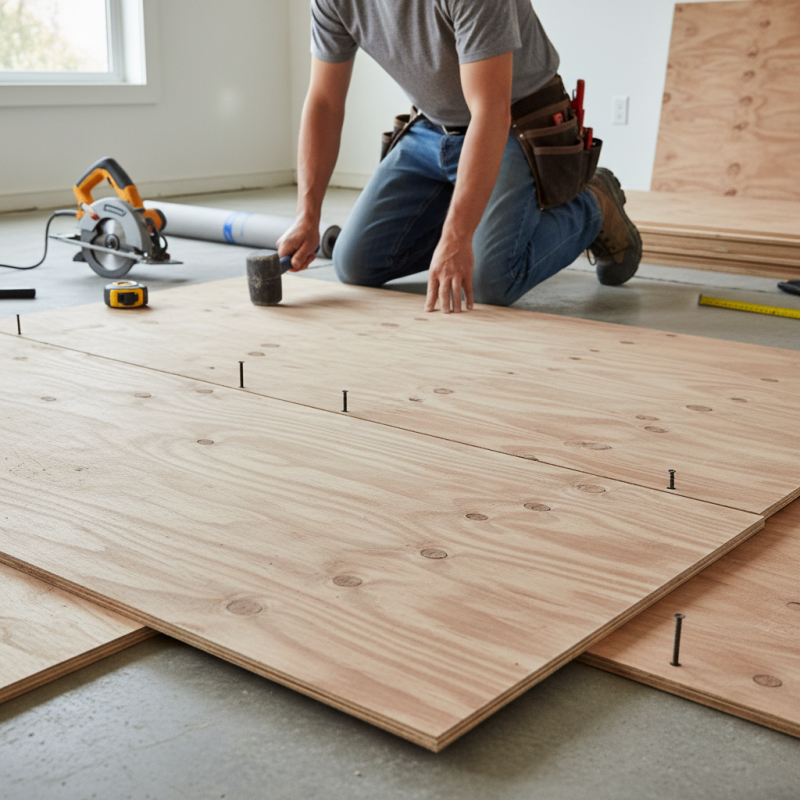
Choosing the right type of plywood for flooring underlayment is crucial. The plywood should be moisture-resistant. Look for 3/4 inch thick sheets. This thickness provides stability and minimizes movement. Another aspect to consider is the grade. A higher grade plywood will have fewer defects. This leads to a smoother surface for your flooring.
When selecting plywood, you should also think about the type of flooring you’re installing. Some floors require specific underlayment properties. For example, laminate flooring often benefits from softer underlayment. This helps in noise reduction. On the other hand, hardwood may need a sturdier base.
Here are some tips to guide your choice: always check for a moisture barrier. This helps prevent warping over time. Also, consider environmental factors. If humidity levels are high, opt for treated plywood. Lastly, keeping your budget in mind can lead to compromises. Higher-grade materials can be expensive, but investing in quality is wise. Choose wisely and assess your options carefully.
This chart compares various plywood types used for flooring underlayment based on key factors such as thickness, cost, weight, sound insulation, and moisture resistance. Understanding these metrics can help you make informed decisions for your flooring projects.
Preparing the subfloor is a critical step when installing plywood underlayment. A well-prepared subfloor ensures durability and comfort. According to the National Wood Flooring Association, a flat and clean surface can reduce the risk of squeaks and flexing by up to 70%. This is a significant factor in extending the lifespan of your flooring system.
Start by checking for moisture levels. Ideally, the subfloor should maintain a moisture content below 12%. Use a moisture meter for accurate readings. If the moisture levels are high, consider using a moisture barrier to prevent damage. Clean the area thoroughly, removing dust and debris that could interfere with adhesion. This cleanliness also minimizes the risk of mold and mildew, which can compromise your indoor air quality.
Tip: Ensure your subfloor is level. Uneven surfaces can lead to complications later. A self-leveling compound might be necessary for significant dips and bumps. Furthermore, remember to leave a small gap around the edges of the plywood. This helps accommodate expansion and contraction caused by humidity changes. By taking these steps, your plywood underlayment will provide a solid foundation for your flooring.
Installing plywood underlayment can greatly improve your flooring project. Begin by measuring your room accurately. Purchase enough plywood sheets to cover the entire area. It’s wise to let the plywood acclimate to the room temperature for at least 24 hours. This helps prevent warping later.
Cut the plywood to fit your space. Aim for seamless transitions between boards. Use a circular saw for straight cuts, and wear protective gear. Lay the boards in a staggered pattern. This enhances stability and minimizes gaps. Make sure to leave a small expansion gap near the walls to allow for movement.
As you install, check for levelness. Uneven surfaces can cause flooring issues down the road. Use a level tool often. If you encounter rough edges, sand them down for a smoother finish. Pay attention to how the plywood interacts with your flooring material. If steps are missed, it may lead to complications, so double-check your work.
When using plywood as a flooring underlayment,
sealing and finishing
are crucial for durability. A well-sealed underlayment can significantly reduce moisture damage.
Industry studies show that untreated plywood can absorb up to 30% of its weight in water.
This can lead to warping and deterioration over time.
Applying a high-quality sealant helps create a
barrier against moisture.
It is advisable to use sealants specifically designed for plywood. Some woodworkers recommend a
two-coat application for ideal protection. It’s essential to ensure even coverage to avoid
any gaps. Over time, inconsistencies in sealing can lead to issues like mold growth
or floor instability.
Finishing the plywood is another critical step. A proper finish protects against wear and tear.
Oil-based finishes can provide a long-lasting effect,
but they require longer drying times. Water-based finishes dry faster
but may not offer the same level of protection. Choosing the right finish depends on the expected foot traffic.
Some experts suggest reapplying the finish every few years to maintain the quality. Regular assessment of both seal
and finish can catch potential failures early, ensuring the longevity of your flooring.
When using plywood for flooring underlayment, many mistakes can arise. One common error is not selecting the right thickness. Thinner plywood may not provide adequate support, leading to floor squeaks. It's essential to use at least 5/8 inch thick plywood for best results. Also, ensure that the plywood is properly acclimated to the room’s humidity. This process helps prevent warping over time.
Another mistake is using untreated plywood in damp areas. Moisture can damage it, causing mold and other issues. Opt for exterior-grade plywood or seal the edges for added protection. Additionally, avoid improper fastening. Screws should be spaced correctly to avoid movement. Too close together or too far apart can lead to uneven surfaces. Take the time to plan your layout carefully with accurate measurements.
| Common Mistakes | Description | Solutions |
|---|---|---|
| Using Incorrect Thickness | Choosing a thickness that does not match the floor type can lead to uneven surfaces. | Refer to manufacturer recommendations based on flooring type. |
| Improper Installation | Being careless with installation procedures can lead to warping and damage. | Follow step-by-step installation guides closely for the best results. |
| Neglecting Moisture Barriers | Failing to protect against moisture can cause plywood to deteriorate. | Use a moisture-resistant barrier, especially in high humidity areas. |
| Ignoring Acclimation | Not allowing plywood to acclimate may cause expansion or contraction after installation. | Let plywood sit in the room for 48-72 hours before installation. |
| Overusing Adhesive | Excess adhesive can create a mess and affect the bonding process. | Apply adhesive sparingly according to guidelines. |
: Sealing plywood prevents moisture damage. Untreated plywood can absorb 30% of its weight in water.
A two-coat application is recommended. It ensures better protection against moisture.
Inconsistencies in sealing can lead to mold growth and floor instability. It's crucial to achieve even coverage.
Oil-based finishes offer durability but take longer to dry. Water-based finishes dry quickly but may be less protective.
It's advised to reapply the finish every few years. Regular assessments can help maintain quality.
At least 5/8 inch thick plywood is ideal. Thinner plywood may cause floor squeaks and inadequate support.
Use exterior-grade plywood or seal edges to protect against moisture. Untreated plywood can lead to mold.
Correctly spaced screws prevent movement and uneven surfaces. Poor fastening can lead to future flooring issues.
Yes, acclimating plywood to room humidity is vital. It helps reduce the risk of warping over time.
Improper measurements and layout can create problems. Take time to plan to avoid future complications.
Using plywood for flooring underlayment can be an effective solution when done correctly. First, it's crucial to choose the right type of plywood, considering factors like thickness and moisture resistance. Preparing the subfloor is the next step, which involves ensuring it is clean, dry, and level to prevent issues later on. The installation process requires careful alignment and secure fastening of plywood sheets to ensure a stable base. After installation, sealing and finishing the plywood underlayment will enhance its durability and resistance to wear.
Moreover, homeowners should be aware of common mistakes, such as inadequate moisture protection or improper fastening, which can compromise the integrity of the underlayment. Overall, by following these guidelines and knowing that "can plywood be used for flooring underlayment," one can achieve a successful flooring project that stands the test of time.

Regit Decor