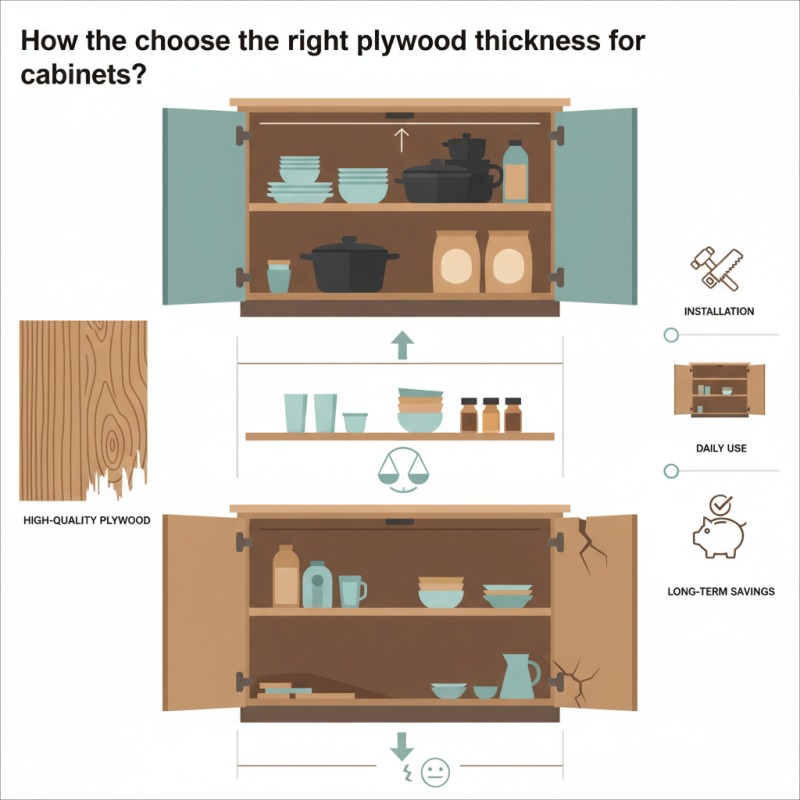
Choosing the right plywood thickness for cabinets can greatly impact their durability and appearance. This decision involves more than just aesthetics; it also affects functionality and longevity. Many homeowners underestimate how plywood thickness influences the structural strength of cabinets.
When considering how to choose the right plywood thickness for cabinets, think about the weight the shelves will bear. Thicker plywood can support heavier items without sagging. Additionally, the type of plywood matters. High-quality plywood ensures better performance and durability.
It's important to reflect on your needs. Some may prioritize style over substance. However, balancing these aspects is crucial. Cabinets are a long-term investment, and selecting the proper thickness can save you money in the long run. Choose wisely to avoid frustration and regret later on.
Understanding Cabinet Construction and Design Requirements
When it comes to cabinet construction, understanding design requirements is crucial. The thickness of plywood directly impacts the durability and aesthetic of the cabinets. For heavy-duty storage or kitchen cabinets, thicker plywood is often preferred. A thickness of 3/4 inch is common for side panels. Thinner materials might warp over time, leading to potential design flaws.
It’s important to consider the overall design. For instance, a sleek, modern look might use 1/2 inch plywood for a lightweight style. However, this could compromise the structural integrity. Balancing aesthetics with strength is another layer of complexity. Adjusting for hardware, such as hinges and drawer slides, may also dictate thickness.
Reflect on your specific needs. Custom cabinets might require unique choices in thickness based on the intended use. Scenarios vary significantly. Some designs might be over-engineered, while others may skimp on material. It’s essential to explore various options and even consult with professionals to ensure your cabinets meet both style and function.
Analyzing Load-Bearing Needs for Different Cabinet Types
When analyzing load-bearing needs for different cabinet types, it’s crucial to consider the expected weight they will support. For instance, kitchen upper cabinets must hold dishes, spices, and small appliances. Research indicates that each cubic foot of cabinet space can hold around 7-10 pounds. Thus, if a cabinet measures 3 feet wide and 1 foot deep, it could potentially bear 21-30 pounds. This finding underscores the importance of selecting the right plywood thickness.
Standard plywood thicknesses include ½ inch, ¾ inch, and 1 inch. A thinner plywood, like ½ inch, may suffice for lightweight applications, such as decorative shelves. However, heavier cabinets require a sturdier option. The ¾ inch plywood is often recommended for base cabinets. This thickness offers greater durability and enhances load distribution. Industry reports suggest that cabinets constructed with ¾ inch plywood have a lower failure rate under stress compared to those using ½ inch materials.
Cabinet construction also plays a role in weight distribution. Full-depth cabinets can better support heavier items. Yet, even with optimal materials, builders must remain cautious. Poor assembly and lack of adequate support can lead to structural issues. According to a study by the Cabinet Makers Association, nearly 30% of cabinet failures result from improper installation, highlighting the need for reliable craftsmanship alongside quality materials.
How to Choose the Right Plywood Thickness for Cabinets
Evaluating Common Plywood Thickness Options for Cabinets
Choosing the right plywood thickness for cabinets requires careful evaluation. Common thickness options include 1/4 inch, 1/2 inch, and 3/4 inch plywood. Each thickness has unique characteristics that influence durability and appearance.
1/4 inch plywood is lightweight and flexible. It's suitable for back panels or cabinet doors in light-duty applications. However, this thin material may bow or warp under pressure, limiting its use for heavier items. On the other hand, 1/2 inch plywood provides a balance between strength and weight. It is ideal for mid-weight cabinets, but still, caution is needed. Sometimes, it may lack the sturdiness desired for heavier usage.
3/4 inch plywood is the most robust option. It offers excellent stability and load-bearing capabilities. This thickness is ideal for shelves designed to hold substantial weight. However, using thicker plywood may add to overall project costs and weight. Consideration of all factors is essential. Reflect on how much weight your cabinets will support and the visual impact each thickness brings to your space.
Considering Aesthetic Factors in Plywood Selection
When choosing plywood for cabinets, aesthetic factors play a crucial role. The wood's grain pattern, color, and surface finish contribute significantly to the overall design. According to the 2022 Plywood Market Report, consumers increasingly prefer high-quality, aesthetically pleasing materials. The report emphasizes that 75% of homeowners consider appearance a top priority during renovations.
For a contemporary look, selecting plywood with a smooth finish is essential. Materials like birch or maple provide a clean, modern appearance. Rich colors like walnut add warmth and elegance. However, it’s important to note that aesthetics should not overshadow functionality. Plywood thickness impacts strength and durability. Thinner plywood may warp over time, affecting the design.
Moreover, not all plywood types are created equal. Some may present issues with splintering or irregular surfaces, detracting from the desired aesthetic. Aesthetic choices often lead to difficult decisions about thickness and quality. Research indicates that cabinet quality directly influences a home’s resale value. Therefore, investing in the right plywood that balances beauty and functionality is crucial for a lasting impact.
How to choose the right plywood thickness for cabinets? - Considering Aesthetic Factors in Plywood Selection
| Plywood Thickness (inches) |
Common Uses |
Aesthetic Considerations |
Durability Level |
Cost (per sheet) |
| 1/4 |
Drawer sides, light-duty dividers |
Offers a lightweight appearance, easy to finish |
Low |
$15 |
| 1/2 |
Shelves, cabinet backs |
Balances weight and stability, can be stained nicely |
Medium |
$30 |
| 3/4 |
Cabinet frames, solid doors |
Provides a rich, robust appearance, holds finishes well |
High |
$50 |
| 1 |
Heavy-duty furniture, commercial applications |
Gives a strong, substantial look, ideal for high-end finishes |
Very High |
$70 |
Budgeting for Plywood Choices and Their Impact on Cabinet Quality
When choosing plywood for cabinets, consider your budget carefully. The thickness of the plywood directly affects both quality and cost. Thicker plywood tends to be more durable. It can also handle weight better, which is essential for shelves and cabinet doors. However, thicker plywood comes at a higher price. Balancing budget and quality is critical.
Many homeowners overlook the long-term value of investing in quality plywood. Cheaper options might save money upfront. Yet, they often warp or chip more easily, leading to additional costs down the line. Assessing your needs will help in making informed decisions. Sometimes, it's worth spending a bit more upfront for better quality.
Reflecting on past projects can also inform your choices. Perhaps you cut corners once and later regretted it. These experiences highlight the importance of budgeting correctly. Ensuring the right thickness protects your investment for years to come. Skimping now could mean spending more later. Finding the right plywood thickness is a balance of cost and quality.
FAQS
: Consider the expected weight, cabinet type, and material thickness. Each cubic foot supports 7-10 pounds.
3/4 inch plywood is recommended. It provides better durability and load distribution for substantial weight.
Using 1/2 inch plywood can lead to failures under stress. It may not support heavier items effectively.
Full-depth cabinets support heavy items better. However, poor assembly can lead to structural issues.
Improper installation can cause failures. Nearly 30% of cabinet issues arise from unreliable assembly.
Yes, higher quality plywood is more durable. Cheaper options might warp or chip, leading to extra costs later.
Thicker plywood has a more substantial appearance. Consider how each thickness affects your space visually.
No, lightweight materials may warp under pressure. They are best for light-duty applications only.
Consider long-term value. Spending more initially can save money on replacements or repairs later on.
Past mistakes show the importance of proper budgeting. Skimping may lead to regrets and higher future costs.
Conclusion
When considering how to choose the right plywood thickness for cabinets, it's essential to understand the specific construction and design requirements of your cabinetry. Different cabinet types have varying load-bearing needs, which play a crucial role in determining the appropriate plywood thickness. Evaluating common options, such as 1/4", 1/2", or 3/4" thicknesses, will help ensure the structural integrity of your cabinets while meeting aesthetic preferences.
Additionally, it's important to factor in budget considerations, as the choice of plywood can significantly impact the overall quality and durability of the cabinets. Balancing quality with cost is key to making an informed decision. By addressing these elements, you can successfully navigate the selection process and achieve cabinets that are both functional and visually appealing.
 Regit Decor