Choosing LVL instead of solid wood beams in 2026 requires more than comparing prices. The decision begins with load, span, moisture exposure, available space, and installation conditions. Why use LVL instead of solid wood beams? LVL offers predictable strength, consistent dimensions, and fewer natural defects across long spans. Its straight edges can simplify framing around stair openings, wide windows, and open-plan rooms. It also reduces the guesswork caused by knots, checks, and irregular grain.
Frank Woeste, Ph.D., a recognized wood engineering educator, explains the design principle this way: “Design for the load path, not merely for the beam’s appearance.” That advice matters on real projects. A 24-foot beam may look adequate on paper, yet its supports, connections, bearing length, and deflection still require professional review. LVL is not automatically the best answer. It can cost more, needs careful protection from prolonged moisture, and may demand equipment for safe handling. A mistake remains possible.
This guide examines when LVL provides a stronger and more practical alternative to solid wood. It considers stiffness, strength, dimensional stability, jobsite handling, environmental conditions, and total installed cost. The comparison also recognizes an uncomfortable point: material selection can change with local supply, building design, and engineering requirements. A contractor’s field experience may reveal issues that a product brochure misses. Always verify span tables, grades, connection details, and local code requirements with a qualified structural professional before ordering materials.
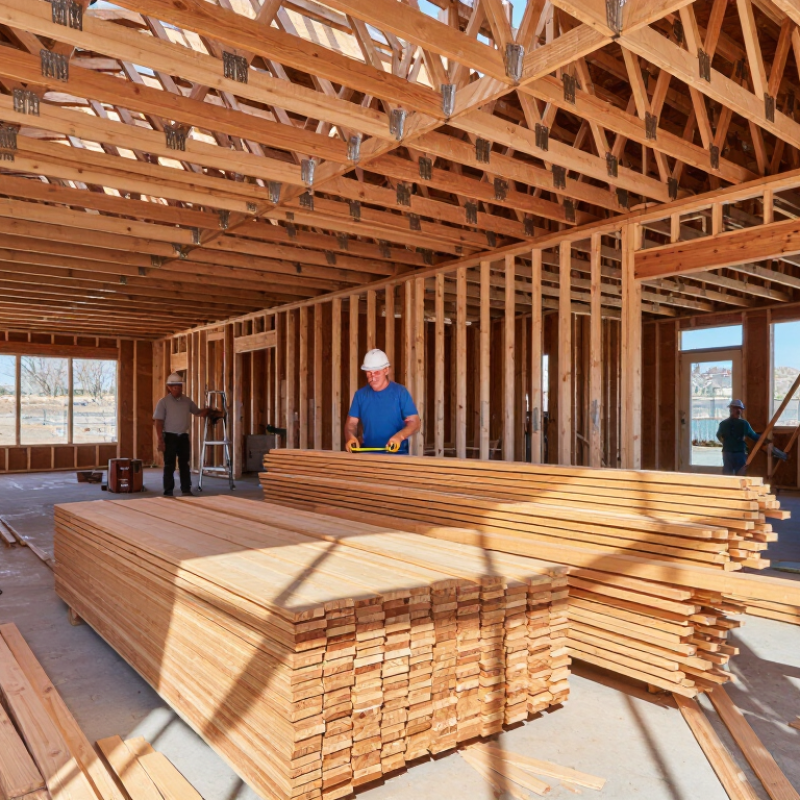
LVL, or laminated veneer lumber, is made from thin wood veneers with their grain aligned. Adhesive bonds these layers into a straight, engineered beam. Solid wood beams come from one sawn piece. Their strength can vary around knots, checks, and changing grain. LVL reduces many of those weak points through controlled manufacturing. However, it is not automatically stronger in every situation.
The USDA Forest Products Laboratory’s Wood Handbook, FPL-GTR-282 (2021), reports typical wood shrinkage of about 3–6% radially and 6–10% tangentially. That movement can create gaps, twists, or uneven floors. LVL still responds to moisture, but its layered structure usually offers more predictable dimensions. APA technical guidance also shows that LVL design values depend on product grade, span, load, and installation. Therefore, never select a beam by width alone. A structural engineer should verify the span tables and connection details.
Tips: Measure the opening carefully, then inspect nearby moisture damage. Ask for the beam’s grade stamp and published design values. Keep LVL protected from rain before installation. I often allow extra attention around bearing points. The comparison is not perfectly neat. Solid timber may suit short spans or exposed interiors, while LVL can simplify long, straight runs. Still, actual site conditions matter more than a sales-sheet number.
How to Choose LVL Instead of Solid Wood Beams in 2026?
When LVL Is the Better Structural Choice
LVL becomes the stronger choice when a beam must carry heavy loads across a long, open span. Its layered veneers reduce the influence of knots, splits, and grain changes. The USDA Forest Products Laboratory’s Wood Handbook, FPL-GTR-282, explains that engineered wood offers more consistent structural properties than many solid-sawn products. Typical published LVL tables show an elastic modulus near 1.9 million psi and bending values around 2,600 psi, although grades differ. That consistency matters above wide doors, garage openings, and heavily loaded floors.
I have seen solid wood beams twist after installation, especially when moisture changes during construction. LVL usually arrives straighter and remains easier to align. It can also reduce beam depth, protecting ceiling height in tight renovations. Not always.
Solid timber may still suit short spans, exposed interiors, or projects with simple loads and local availability. A lower purchase price can become irrelevant after shimming, crowning, and correcting movement. Designers should verify bearing length, lateral restraint, fastener spacing, moisture exposure, and fire requirements. The American Wood Council’s 2024 National Design Specification requires member-specific calculations, not visual guesses. I would not treat 1.9E as a universal answer. Actual span tables, load duration, and connection details can change the decision. That uncertainty deserves a second review.
When LVL Is the Better Structural Choice
Representative design values show why LVL is often preferred for longer spans, heavier loads, and applications where predictable stiffness is important. The example uses typical published values for structural LVL and No. 2 softwood lumber; actual values vary by species, grade, span, moisture, load duration, and manufacturer.
How to Choose LVL Instead of Solid Wood Beams in 2026?
When comparing LVL with solid wood, start with strength, not price. LVL is manufactured from bonded wood veneers, so its structure is usually more consistent. It can handle long spans with less twisting and fewer natural defects. Still, LVL is not automatically stronger in every direction. Check its bending, shear, and compression values against the project loads. A qualified structural engineer should confirm the final selection.
Size affects both performance and installation. LVL often provides deeper, straighter beams for open floor plans. Solid wood may be easier to cut on site, but knots and warping can change its behavior. Do not drill holes or notch an LVL beam casually. Follow the manufacturer’s technical tables and local building requirements. Mistakes happen here.
Tips: Compare the complete installed cost. Include delivery, temporary supports, lifting equipment, fasteners, and labor. A cheaper beam may cost more after handling delays. Ask suppliers about current stock, standard lengths, and realistic lead times. Moisture exposure also matters during construction. Cover beams promptly, even when the forecast looks harmless. I would recheck availability before finalizing drawings, because supply conditions can change within weeks.
Choosing the right LVL beam starts with the load path, not appearance. Calculate dead loads, live loads, span, bearing length, and deflection limits before comparing sizes.
Load paths matter.
LVL can offer predictable strength because veneers are graded and bonded under controlled manufacturing conditions. However, its capacity still depends on the specified grade, thickness, orientation, and connection details.
The USDA Forest Products Laboratory’s Wood Handbook, 2021, uses 12% moisture content as a reference condition for comparing wood properties. Moisture changes can reduce stiffness and increase movement. Therefore, inspect roof leaks, bathrooms, exterior walls, and unconditioned storage areas before selecting a beam.
APA technical guidance also emphasizes using grade-specific design values, not assumptions based only on beam depth.
Details decide performance.
Check fire protection, lateral restraint, end bearing, and fastener spacing with a qualified structural professional. A deeper beam may reduce deflection, but it can create awkward ceiling drops or service conflicts.
I have seen installation plans fail because the beam fit structurally, but not physically. That shortcut is tempting, but wrong.
Review the manufacturer’s technical data, local building requirements, and site measurements together. A small bearing error can become a costly correction.
Choosing LVL instead of solid wood beams in 2026 requires more than comparing span tables. Installation changes the result. LVL is manufactured for consistent strength, but edges can be damaged during lifting. Keep beams flat, supported at regular intervals, and protected from standing water. A two-person lift may be unsafe for long members; use mechanical support when weight or access becomes difficult. Field cuts should follow the approved design, not convenience.
The USDA Forest Products Laboratory’s Wood Handbook reports that wood products can change dimension significantly across the grain as moisture shifts. Keep LVL near the building’s service moisture before installation. A practical target is often 8–12% moisture content for conditioned interiors, subject to local design guidance. Store members above ground, under cover, with spacers that allow airflow. Do not wrap wet beams tightly in plastic. That mistake traps moisture.
Long-term performance depends on bearing length, bracing, fastener placement, and sustained loading. The Engineered Wood Association’s technical guidance emphasizes following published installation details and preventing concentrated loads from exceeding design assumptions. LVL usually offers more predictable stiffness than ordinary solid-sawn lumber, yet it is not immune to creep. The USDA handbook links creep to sustained stress and elevated moisture. Check connections after framing, especially where beams support masonry or heavy partitions. A recurring site lesson is simple: the beam may be straight, but the surrounding details are not always perfect. That deserves review.
| Evaluation Dimension | LVL Beams | Solid-Sawn Wood Beams | 2026 Selection Guidance |
|---|---|---|---|
| Structural consistency | Manufactured from layered veneer with controlled orientation, producing more uniform strength and stiffness along the beam length. | Natural knots, slope of grain, checks, and growth variations can create greater piece-to-piece variability. | Prefer LVL where predictable performance, longer spans, or reduced deflection are important. |
| Typical span efficiency | High strength-to-size efficiency can allow longer spans or shallower beam depths, subject to engineering design. | Span capacity depends strongly on species, grade, section size, knots, and local grading rules. | Compare design values and deflection limits rather than selecting by nominal dimensions alone. |
| Dimensional accuracy | Factory-controlled thickness and straightness generally simplify layout, cutting, and connection detailing. | May require additional inspection, sorting, trimming, or packing to achieve a straight, level installation. | LVL is useful where tight tolerances are needed for floors, openings, and prefabricated assemblies. |
| Weight and handling | Often heavy for its size because of dense veneer construction; long members may require mechanical lifting or a planned crew lift. | Weight varies widely with species and moisture content; large solid sections can also be difficult to maneuver. | Calculate member weight before delivery and provide lifting points, temporary supports, and clear access routes. |
| Cutting and drilling | Can be cut and drilled with normal woodworking tools, but oversized holes, notches, and end cuts must follow approved engineering limits. | Also workable with standard tools, but knots and checks can affect fastener placement and local strength. | Keep penetrations away from high-stress zones unless permitted by the design documentation. |
| Installation sequence | Install level, brace against lateral movement, and provide full bearing at supports; follow the specified orientation and connection schedule. | Requires the same basic support principles, with additional attention to crown, twist, bow, and localized defects. | Do not remove temporary bracing until the supported framing or diaphragm is complete. |
| Moisture exposure | Standard interior LVL is not automatically preservative-treated or suitable for prolonged wet exposure; protect ends and surfaces from rain. | Untreated solid wood is also vulnerable to elevated moisture, fungal decay, and dimensional movement. | Use only a product approved for the exposure class, and correct leaks or drainage problems promptly. |
| Shrinkage and movement | Generally more uniform than solid wood, but it still responds to changes in moisture and may shrink across the grain. | More likely to show variable shrinkage, checking, twisting, and crowning as moisture content changes. | Maintain weather protection and allow the structure to reach service moisture conditions before closing finishes where practical. |
| Connection requirements | Connections must account for concentrated reactions, edge distances, fastener spacing, and possible veneer splitting. | Connection behavior depends on wood species, density, grade, grain direction, and the condition of the member. | Use the structural drawings and approved connection hardware; do not substitute fasteners without review. |
| Fire performance | It is a combustible wood product; fire resistance depends on member size, protection, charring, connections, and the assembly design. | It is also combustible, with fire behavior affected by section size, moisture, surface exposure, and protective assemblies. | Verify the required fire-resistance rating with the applicable building code and project engineer. |
| Long-term deflection | Creep can occur under sustained load, especially with high moisture; design checks should include the applicable long-term load factors. | Also subject to creep, with performance influenced by species, grade, moisture, loading duration, and member defects. | Check immediate and long-term deflection limits for floors, roofs, and sensitive finishes. |
| On-site storage | Store flat, off the ground, supported at regular intervals, and covered with ventilation to prevent trapped condensation. | Use similar storage practices; unsupported long members are particularly susceptible to bowing and twist. | Keep materials wrapped until needed, but avoid sealed coverings that trap water. |
| Best-fit applications | Long-span headers, floor beams, roof beams, point-load transfers, and projects requiring predictable dimensions. | Shorter spans, traditional exposed timber work, readily available local sections, and applications where natural appearance is a priority. | Select the material that satisfies design values, exposure conditions, availability, installation limits, and total project cost. |
Note: Final beam selection must be based on project-specific structural calculations, governing building codes, exposure conditions, manufacturer-approved design values, and the requirements of a qualified structural professional.
LVL means laminated veneer lumber. Thin wood layers are glued with aligned grain, forming a straight engineered beam.
Solid wood comes from one sawn piece. Its strength can change near knots, checks, and irregular grain.
No. LVL often provides more consistent performance, but strength depends on grade, span, loads, and installation.
LVL suits long openings and heavy loads. It can support wide doors, garage openings, and loaded floors with fewer weak points.
Sometimes. A suitable LVL beam may need less depth than a comparable solid beam.Not always.
No. LVL still reacts to moisture. However, its layered construction usually offers more predictable dimensions than solid wood.
Measure the opening carefully. Check nearby walls and floors for dampness, stains, twisting, or uneven surfaces.
Verify span, load, bearing length, lateral restraint, fastener spacing, moisture exposure, and fire requirements with a structural engineer.
Ask for its grade stamp and published design values. Do not choose by width alone.
Solid wood may suit short spans, visible interiors, simple loads, or projects with nearby suitable timber.
Keep it covered from rain. Protect the ends and bearing areas from standing water.A second review helps.
Choosing LVL instead of solid wood beams can provide a more predictable and efficient structural solution for many construction projects. Laminated veneer lumber is made by bonding thin wood veneers under controlled conditions, giving it consistent strength, stability, and fewer natural defects than a solid sawn beam. Why use LVL instead of solid wood beams? LVL is often preferred when longer spans, narrower beam dimensions, reduced twisting, or dependable load performance are required. It can also be easier to source in standardized sizes, although cost and local availability should always be compared.
Selecting the right LVL beam requires evaluating span, load, support conditions, moisture exposure, and design requirements. Beam strength, depth, width, and weight should be checked against project calculations rather than chosen by appearance alone. Proper lifting, storage, cutting limitations, fastening, and installation are equally important to protect performance. When correctly specified and installed, LVL can offer durable, stable support and may simplify construction while reducing the uncertainty associated with natural variations in solid wood.

Regit Decor