 Regit Decor
Which Plywood is Best for Laser Cutting Projects in 2026?
In the world of laser cutting, selecting the right plywood is crucial. For 2026, many makers and hobbyists ponder, "Which plywood is best for laser cutting projects?" The answer can significantly affect the final outcome and quality of the projects. Industry expert John Smith, a renowned designer and material specialist, emphasizes, "The type of plywood you choose can make or break your design."
Different plywoods offer varying levels of precision, burn characteristics, and finish quality. For instance, Baltic Birch plywood is known for its smooth surface and excellent laser cutting properties. However, it may not be widely accessible to all. On the other hand, pine plywood is more common but often provides rough edges after cutting.
As you explore options, think critically about your project needs. Some cuts may require investment in higher-quality materials, while others might benefit from cost-effective solutions. Reflecting on these differences can guide you in answering the question, "Which plywood is best for laser cutting projects?" Tailoring choices to specific requirements is key in achieving great results.
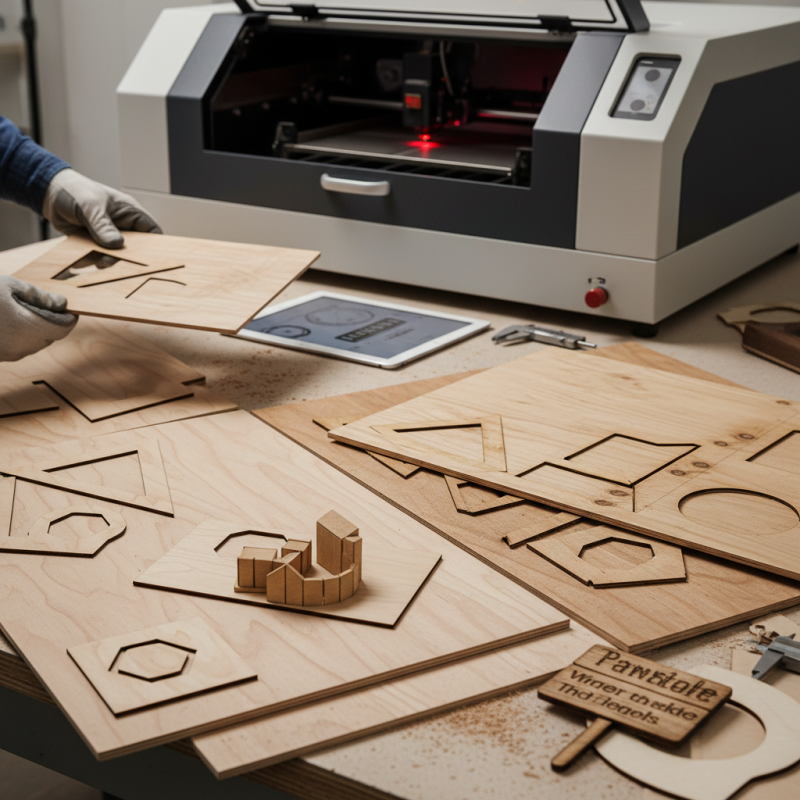
Best Types of Plywood for Laser Cutting: An Overview for 2026
When selecting plywood for laser cutting projects in 2026, it’s important to consider various types. Each offers unique properties that can affect the end result of your designs. Popular options include birch, maple, and poplar plywood. Birch has a tight grain that produces clean cuts, while maple boasts a beautiful finish ideal for visible projects. Poplar, on the other hand, is soft and affordable, making it suitable for prototypes.
Tips for laser cutting include adjusting the speed and power settings. Carefully test these settings on sample pieces to prevent burning or excessive charring. Also, ensure your design accounts for kerf, the material removed by the laser. This adjustment helps in achieving precise fits in your projects.
Experimenting with different plywood types can lead to unexpected discoveries. Sometimes, less expensive sheets perform better than premium options. Don't hesitate to modify your approach based on results. The key is to remain flexible and open to change as you refine your techniques. Consider keeping a journal of outcomes from various materials. This practice can lead to better-informed decisions in your future projects.
Which Plywood is Best for Laser Cutting Projects in 2026? - Best Types of Plywood for Laser Cutting: An Overview for 2026
| Type of Plywood | Thickness (mm) | Laser Cutting Suitability | Finish Quality | Typical Applications |
|---|---|---|---|---|
| Birch Plywood | 3-18 | Excellent | High | Furniture, Signs |
| Maple Plywood | 3-19 | Good | Medium | Cabinets, Toys |
| Pine Plywood | 6-15 | Moderate | Low | Cheap Projects, Model Making |
| Oak Plywood | 4-20 | Good | High | Flooring, Finish Carpentry |
| MDF Plywood | 6-25 | Very Good | Excellent | Cabinetry, Detailed Models |
FAQS
: Birch, maple, and poplar are popular. Birch has a tight grain; maple offers a beautiful finish. Poplar is affordable.
Adjusting speed and power is crucial. Test these settings on samples to avoid burning or excessive charring.
Kerf is the material removed by the laser. Accounting for it ensures precise fits in your designs.
Sometimes, less expensive sheets give better results. Be willing to adapt based on your testing outcomes.
The ideal thickness is between ¼ inch to ½ inch. Thicker plywood can burn; thinner may warp.
Ideal density ranges from 400 to 600 kg/m³. Higher density cuts cleanly but needs more power, costing you.
A moisture content between 5% to 8% ensures consistent cutting. Higher moisture can lead to bubbling and burning.
Yes, maintaining a journal of different materials helps improve future decisions based on past experiences.
High moisture content can produce inconsistent cuts and affect the overall quality of your project results.
No type guarantees success. Results vary based on project needs and material properties, requiring careful consideration.
Conclusion
In the article "Which Plywood is Best for Laser Cutting Projects in 2026?", we explore the optimal types of plywood suitable for laser cutting applications. The best plywood features key properties such as appropriate thickness, density, and moisture content that enhance cutting efficiency and quality. We identify top wood species that are preferred for their performance in laser cutting, providing insights into their individual characteristics.
Additionally, we conduct a comparative analysis of plywood grades to assess their feasibility for laser cutting, considering factors like durability and workability. Lastly, the article addresses the environmental impact and sustainability of plywood choices in 2026, encouraging eco-friendly options. By understanding these aspects, readers can make informed decisions on which plywood is best for laser cutting projects, ensuring both high-quality results and responsible sourcing.
